
Working Capital Drivers – Key Drivers and Improvement Levers
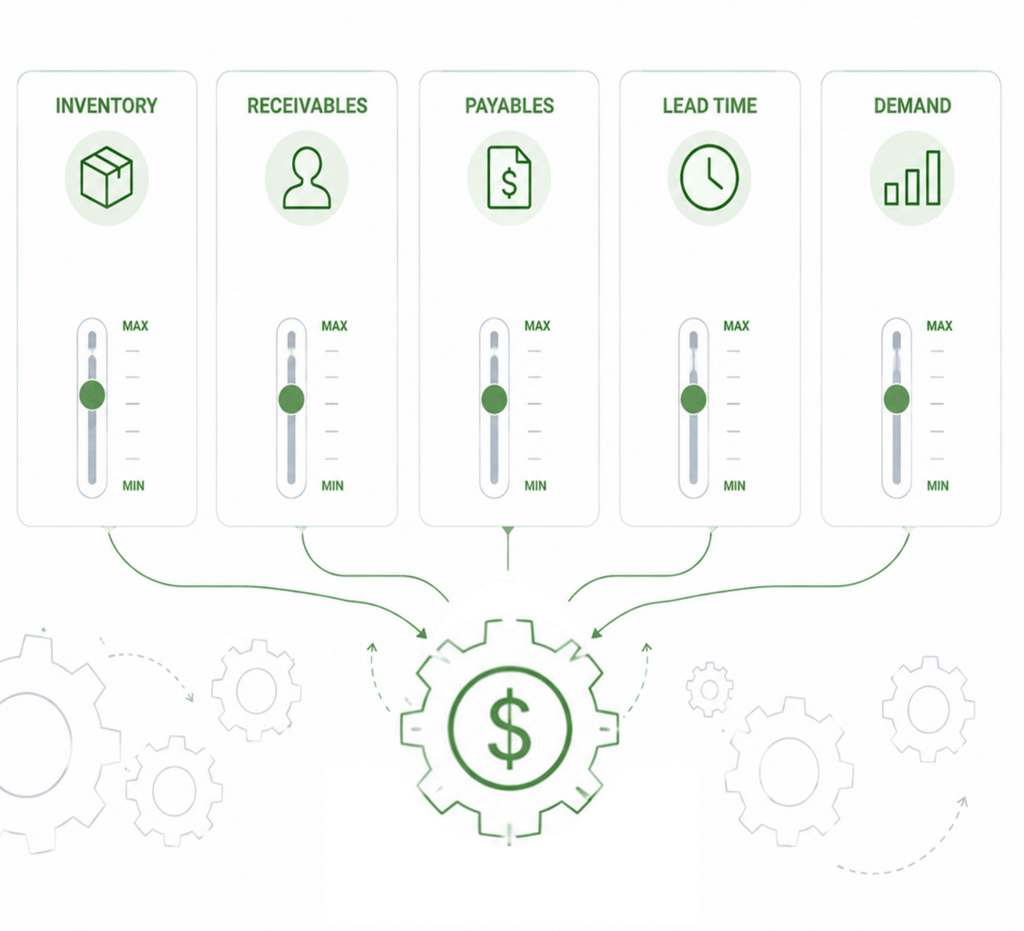
Working capital is not just a financial metric – it reflects how a business operates. This article explains the key drivers behind inventory, receivables, and payables, and shows how operational and commercial decisions translate into cash outcomes. Learn where to focus improvement efforts to unlock sustainable gains in liquidity and performance.
How to Calculate the Cash Conversion Cycle – and What the Number Actually Means

The Cash Conversion Cycle (CCC) is one of the most widely used working capital metrics – but what does it actually measure? This article explains how to calculate the cash conversion cycle, what the formula really tells you, and why even one day of improvement can unlock meaningful cash.
What Is a Good Cash Conversion Cycle? Why Shorter Isn’t Always Better

What is a good Cash Conversion Cycle? Most companies treat the Cash Conversion Cycle (CCC) as a race to the bottom – the shorter, the better. But in reality, a “lean” cycle can backfire. This article explores why the CCC is one of finance’s most misunderstood metrics, and how to manage it around the right setpoint – enough working capital to support the business, but no more than it needs.
Conquer the Bullwhip Effect: 3 Essential Strategies to Protect Inventory, Working Capital, and Cash Flow

Distorted demand signals don’t just disrupt operations – they quietly destroy working capital.
Small shifts in consumer behaviour can cascade into bloated inventory, volatile capacity, and contaminated demand data across the supply chain.
This POV article breaks down what really drives the bullwhip effect today – and how leading companies use demand-driven planning, technology, and supply chain visibility to stay ahead.
Inventory – Complete Guide, Metrics & Best Practices

Inventory is more than “goods waiting to be sold” — it is cash in motion, sitting at the intersection of supply, demand, and operational reality. This guide explains what inventory really is, how it links to Operating Working Capital and the Cash Conversion Cycle, and how to manage it with intent.
You’ll learn how to classify inventory by type and purpose, calculate and govern Safety Stock, choose appropriate replenishment methods, and use segmentation to avoid one-size-fits-all policies. We also unpack key metrics (DIO, Turnover, GMROI, fill rate, SLOB), show why transaction-level data is essential, and explore common challenges like bullwhip, planning drift, and SLOB.
The result is a practical playbook for turning inventory from a static capital burden into a strategic capability that supports service, cash flow, and profitable growth.
If Working Capital Won’t Improve, You’re Battling Bias – Not Constraints
Many companies don’t struggle with operating working capital because of poor forecasts or long lead times. They struggle because of Supply Chain Bias – the hidden force of assumptions, incentives, and habits that inflate buffers and trap cash. If working capital never seems to improve, it’s not a constraint problem. It’s a bias problem. Here’s how to finally see it — and fix it.
The “Last 8%” of Supply Chains: Where Bias and Avoidance Undermine Performance

The “last 8%” problem, as described by JP Pawliw, refers to the critical conversations and decisions teams routinely avoid – stopping just short of addressing the hardest truths. This dynamic is not confined to leadership or team performance; it’s deeply embedded in supply chains. Sales, procurement, operations, and finance each make decisions that appear rational in isolation, yet collectively erode liquidity, resilience, and working capital efficiency. This is supply chain bias: the systemic avoidance of cross-functional trade-offs. Whether rooted in a “family” culture that avoids conflict, a transactional culture that prioritizes silos, or a fear-based culture where silence prevails, organizations leave performance on the table. Closing this last 8% requires courage, connection, and the willingness to confront the uncomfortable truths shaping inventory, receivables, and payables. Until then, the most damaging risks aren’t in disruption – they’re in the decisions we avoid.
The Hidden Enemy of Working Capital: How Supply Chain Bias Drains Cash and Agility

Supply chain bias is the hidden force that makes working capital improvements stall. When functions optimize for themselves, the business as a whole loses. This article explores how bias creeps into everyday decisions, why it is often mistaken for real constraints, and what leaders can do to break free—unlocking cash, agility, and trust across the supply chain.
Accounts Receivable: Complete Guide, Metrics & Best Practices

Accounts Receivable is more than “waiting to be paid.” It is a strategic balance between supporting customer growth and protecting your own liquidity. This guide explains AR fundamentals, credit risk, O2C processes, collections, metrics, financing tools, and future trends – showing how disciplined AR management turns reported revenue into real cash.
Accounts Payable: Complete Guide, Metrics & Best Practices

Accounts Payable is more than paying bills — it’s a financing tool, a supplier relationship lever, and a driver of working capital efficiency. This guide explores AP fundamentals, processes, metrics, strategy, regulation, and future trends.